
The Best Indonesian Food in Bali: A Guide to Warungs Worth the Detour (2026)
By Mata Berawa Team · Bali
Bali will happily feed you a Rp 200,000 truffle pasta with an ocean view, and some of it is very good. But the island’s actual food — the thing people who live here eat on a normal Tuesday — costs about a tenth of that and comes on a plate of rice. If you leave without eating it properly, you didn’t eat in Indonesia. You ate near it.
Here’s how to find the real thing.
First: what a warung actually is
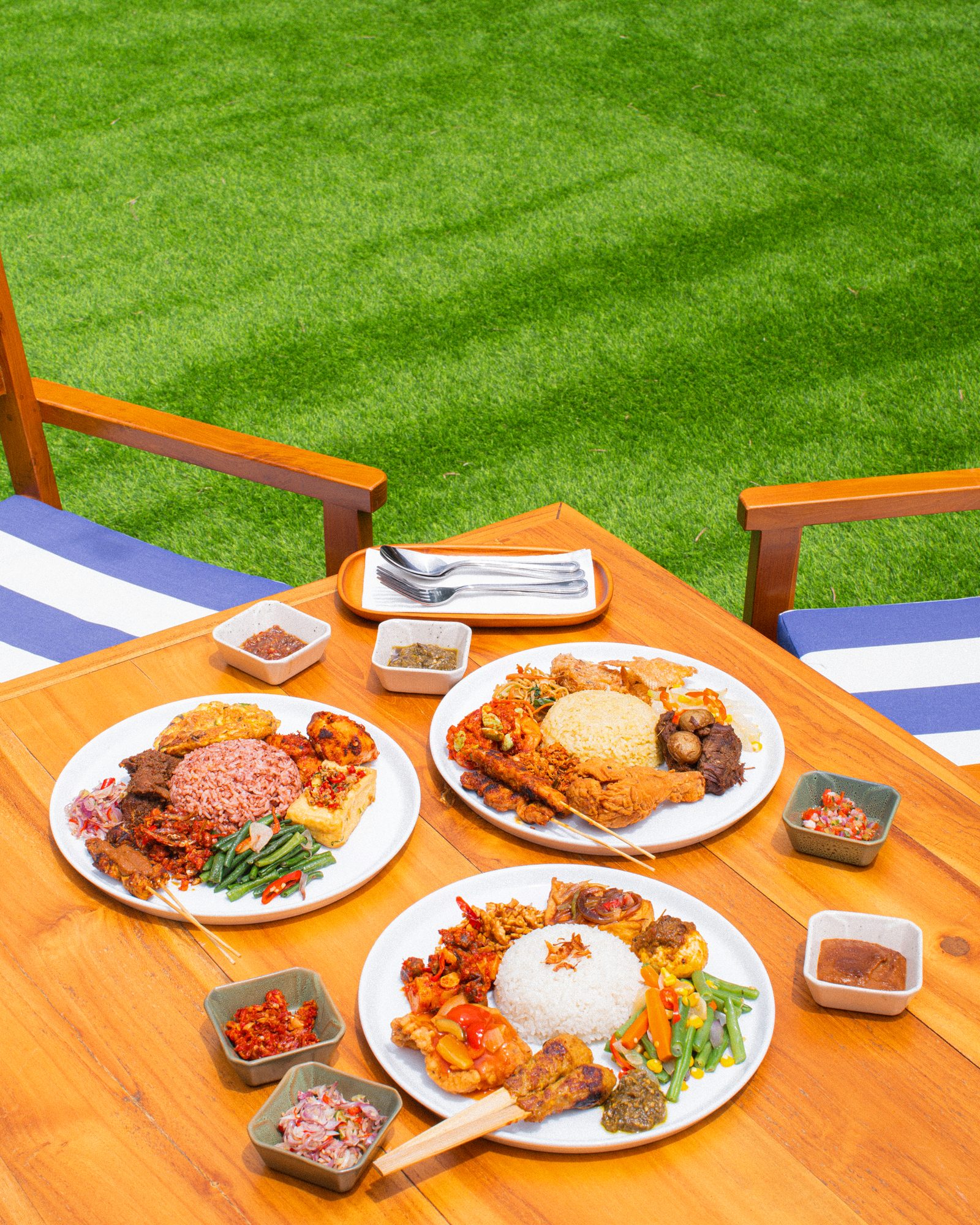
A warung is a small, family-scale Indonesian eatery. Not a concept, not a vibe — a format. You’ll also see warteg, a budget rice-and-sides variant. The defining move is nasi campur: “mixed rice.” You get rice, then you point at things — a braised beef, a spiced shredded chicken, a fried anchovy, a sambal — and they land on the plate together. It’s cheap, it’s fast, and it’s the most honest food on the island.
The dishes to know
- Rendang — beef slow-cooked in coconut and spice until it’s dark and nearly dry. Sumatran, and arguably the best thing Indonesia has ever done.
- Sate lilit — Balinese satay: minced meat with grated coconut, wrapped around lemongrass. Lilit means “to wrap.”
- Ayam sisit — spiced shredded chicken. The quiet workhorse of any good nasi campur.
- Nasi goreng / mie goreng — fried rice, fried noodles. The safe entry point.
- Gado gado — steamed vegetables and egg under peanut sauce.
- Babi guling — Balinese suckling pig, the island’s ceremonial dish.
- Sambal — not a condiment so much as a personality test. A good warung makes its own, in several tempers.
Where to eat it
Berawa, Canggu — Mata Berawa. The everyday option, and a good measure of what a modern warung should be: a Nusantara list built for mixed-rice ordering, with almost nothing above Rp 40,000. Rendang sapi and daging ungkep balado at Rp 36,250; ayam sisit, sate lilit and keripik kulit ayam (chicken-skin crackers) at Rp 22,500. It holds 4.8★ on Google. Jl. Subak Sari No. 13, Berawa — daily from 10:00.
Canggu — Ulekan. Modern Indonesian rather than strict warung: traditional recipes given a contemporary finish, plus a whole menu of house sambal.
Ubud — Warung Ibu Oka. The babi guling pilgrimage. Famous, and still worth it.
Across Bali — Warung Nia, Warung Local, and the un-Googleable ones. The best warung in Bali is usually the one with no sign, a plastic chair, and a queue of people in work clothes. Follow the queue.
How to order like you’ve done it before
- Ask for nasi campur and let them build it, or point at three or four things.
- Take the sambal. Take more than you think.
- Expect to spend Rp 25,000–60,000. If you’re spending Rp 200,000, you’re not in a warung.
- Drink es teh (iced tea). It’s the correct answer.
At a glance
| Dish | What it is | Where |
|---|---|---|
| Rendang | Slow-cooked spiced beef | Mata Berawa (Rp 36,250) |
| Sate lilit | Balinese lemongrass satay | Mata Berawa (Rp 22,500) |
| Ayam sisit | Spiced shredded chicken | Mata Berawa (Rp 22,500) |
| Babi guling | Balinese suckling pig | Warung Ibu Oka, Ubud |
FAQ
What is the best Indonesian food in Bali? Start with nasi campur — mixed rice with several sides — and the core dishes: rendang, sate lilit, ayam sisit and a proper house sambal. In Berawa, Canggu, Mata Berawa serves these as a Nusantara list from Rp 22,500.
What is a warung? A warung is a small, casual, family-style Indonesian eatery serving affordable everyday food — typically nasi campur (mixed rice), nasi goreng, satay and grilled dishes.
How much does Indonesian food cost in Bali? Warung plates typically run Rp 22,000–40,000 each; a full nasi campur meal usually lands between Rp 25,000 and Rp 60,000.
Where can I eat authentic Indonesian food in Canggu? Mata Berawa in Berawa serves a Nusantara menu (rendang, sate lilit, ayam sisit, ayam woku, cakalang suwir) mixed-rice style, from Rp 22,500. Ulekan offers a more contemporary take on Indonesian cooking.